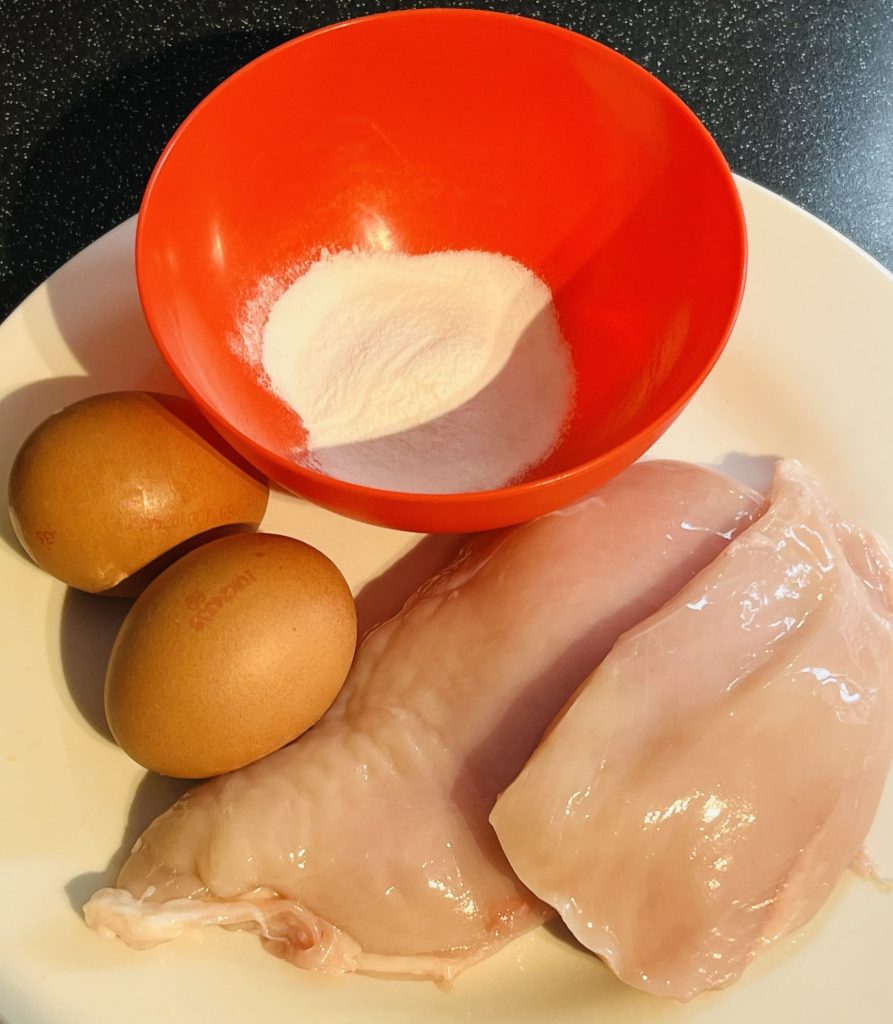
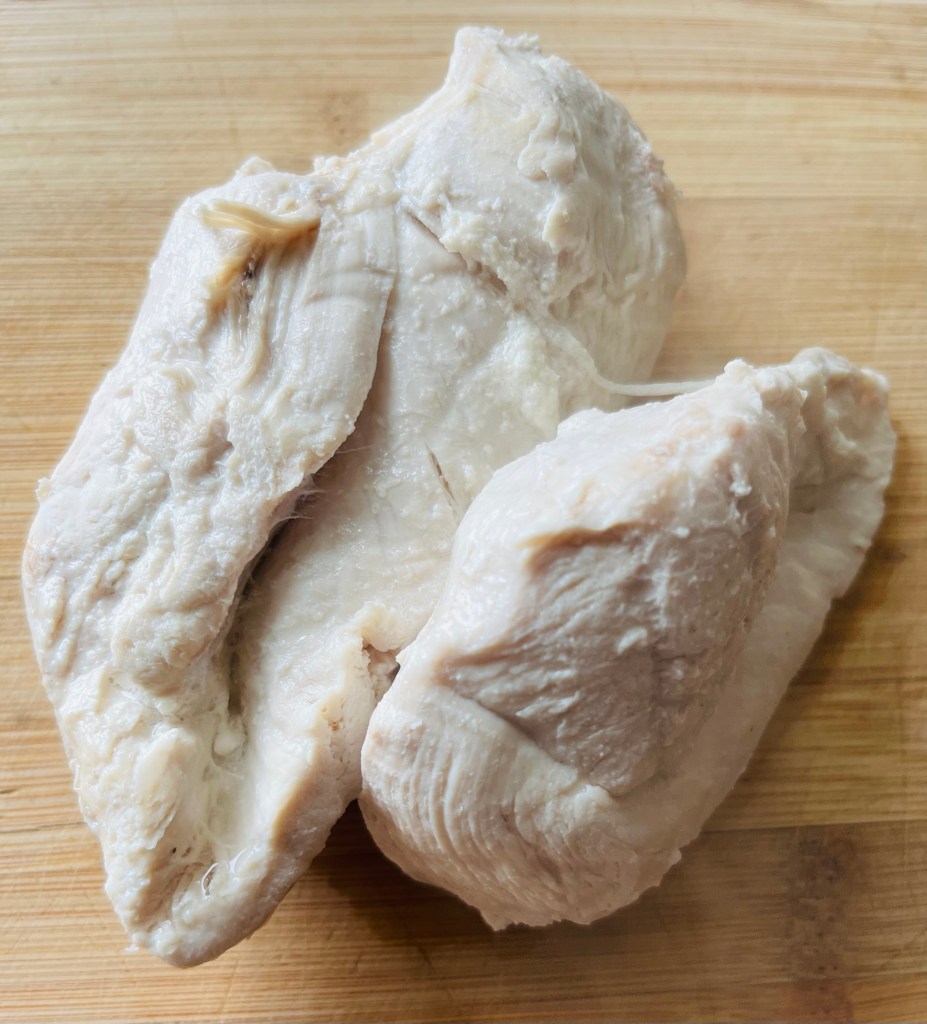
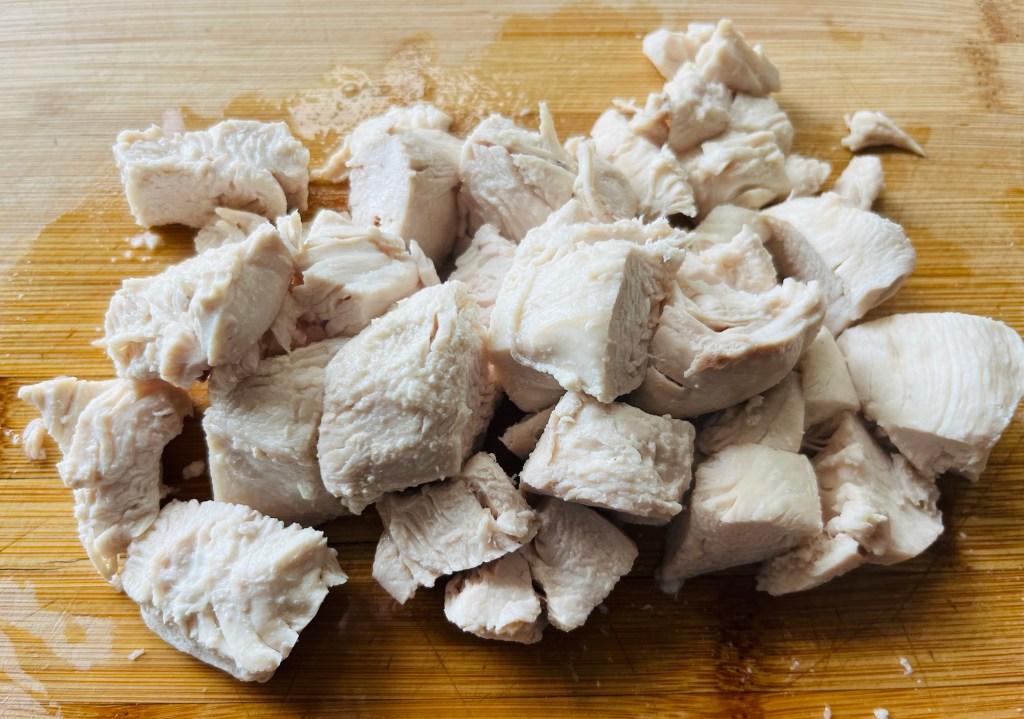
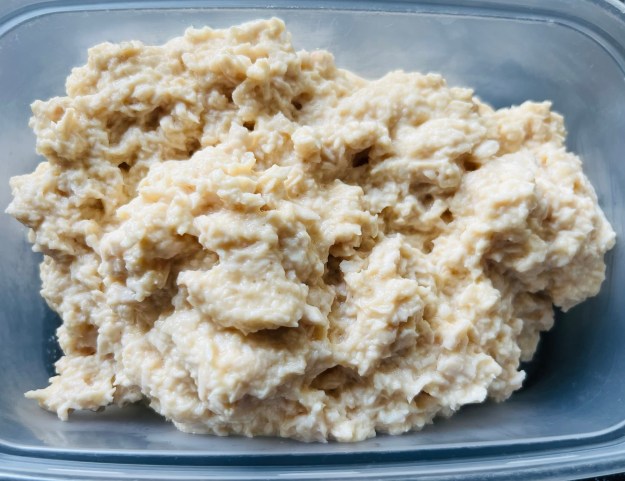
Boil the chicken for 15 minutes. Put the other 2 ingredients in to a food processor. Allow the chicken breasts, once cooked to cool down so you can handle it. Roughly chop the chicken before adding it to the processor.
Once you have processed the mixture, it will look like porridge, Jen says it looks like something else, but I won’t say what.
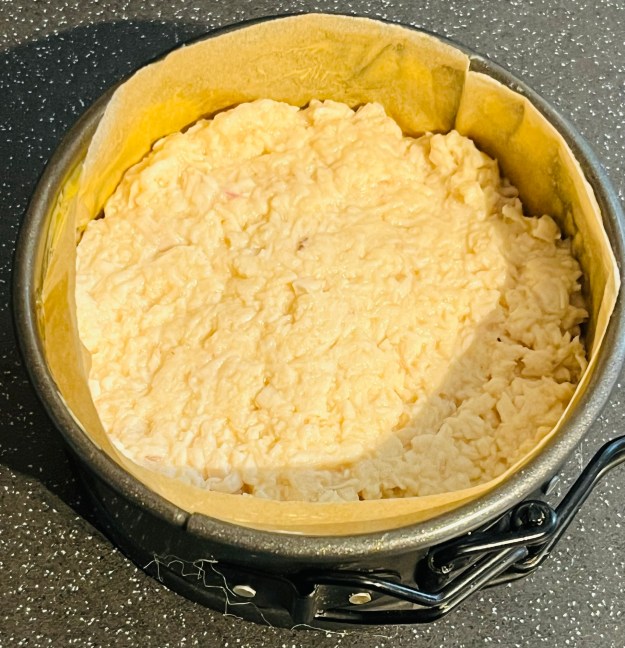
I’m making two buns, so you measure out approximately 150g in each tin. I’ve used a 4 inch cake tin but you could use a ramekin.
You then set an air fryer to 160°C and bake for 15 minutes.
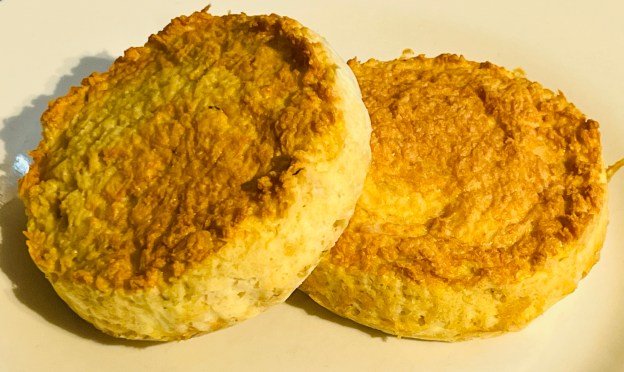
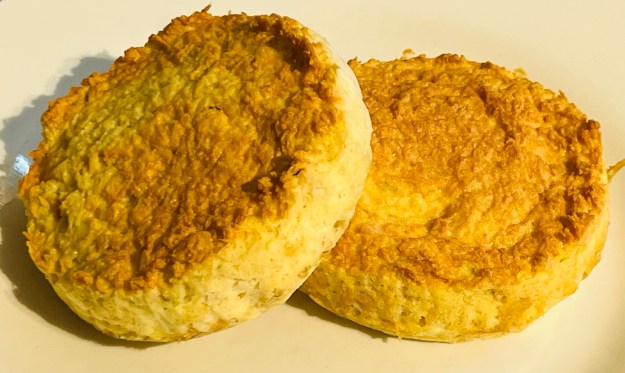
After cooling in the tin for 10 minutes, here’s the finished product……..
You would have to be blinkered to not have noticed the current trend for high protein foods. By that I don’t mean the naturally occurring, bioavailable protein in meat. I’m talking about products that have labels shouting “high protein” in bold lettering.
If you look through the supermarket shelves, you will find highly processed foods extolling their “high protein” status. These include cookies, granola, and even pasta!
The latest dumbfounding addition to the “high protein” family, is beef mince which has added pea protein. Yes, pea protein added to already high protein, nutrient dense beef mince.
The nutritional info tells us that the protein level is higher than the standard beef, but it also tells you that carbs are now present too. The ingredients listed shows that this product only contains 60% beef, which in my mind, is not ideal, as this is minced beef, which should be made from 100% beef. Also, one of the ingredients listed is maltodextrin, which is a filler derived from glucose molecules. I personally don’t want sugar added to my meat, and the knock effects it causes.
In my opinion, this serves as a great reminder to always check the ingredients list on the back of the pack. Just to make sure you are actually buying, what you were hoping to buy. Or, if you can afford it, buy from your local butcher. They will be happy to talk you about their product, and will probably be able to tell you where it was reared, and reassure you that there is nothing random added to your food.
How much sugar do you eat in day? If some of us are being honest, we know that we eat too much sugar. The biscuits or sweets that we tend to eat mid morning, and during that afternoon energy slump add up. I’m sure there are others who eat whole grains, with plenty of fibre, who would say that they don’t consume too much sugar.
Have a look below at an “unhealthy” day of eating, compared to a “healthy” day. The results might surprise you. The examples below are all taken from widely available UK high street retailers, though I haven’t named them, or the products specifically.
The important detail to know is that ALL carbohydrates turn into sugar when eaten, this may not be immediate, but it will happen. Also, this is the case for all of our bodies, NOT just diabetics. So when a label says carbs, read that as sugar.
Unhealthy day’s eating:
Breakfast: 3 crumpets, without jam – 58.2g carbs Pure apple juice. One glass, 150ml – 16.7g carbs Total breakfast carbs – 74.9, 18.7 teaspoons of sugar.
Lunch: A meal deal. Chicken mayo baguette – 62g carbs Ready salted crisps 45g – 23g carbs Can of fizzy drink – 35g carbs Total lunch carbs – 120g carbs, 30 teaspoons of sugar.
Dinner: Four cheese pizza 330g – 93.4g carbs Mini cup leading brand ice cream, 81g serving – 22.8g Total dinner carbs – 116.2g carbs, 29 teaspoons of sugar
Total daily 310.9g of carbs, 77.7 teaspoons of sugar.
Healthy day’s eating:
Breakfast: Superberry granola 50g – 31.7g carbs 50ml skimmed milk – 2.5g carbs Banana, avg flesh weight 100g – 23g carbs 100% pure squeezed orange juice, with bits. One glass, 150ml – 15g carbs Total breakfast carbs – 72.2g carbs, 18 teaspoons of sugar.
Lunch: Tuna and sweetcorn sandwich, on malted bread – 44.5g carbs 120g portion of mango chunks – 16.3g Smoothie drink, with added vitamins and no added sugar – 33g Total lunch carbs – 93.8g of carbs, 23.4 teaspoons of sugar
Dinner: Chicken breast – 0g carbs Sweet chilli dipping sauce, 29g serving – 12.2g carbs Brown rice, 75g uncooked weight – 65.3g carbs Leading brand steamed vegetable bag – 9.8g carbs Total dinner carbs – 87.3g of carbs, 21.8 teaspoons of sugar
Total daily – 253.3g of carbs, 63.3 teaspoons of sugar
Please take a look at the YouTube we have linked, Richard Smith explains extremely well the impact of sugar on our body. Each time we consume over one teaspoon of sugar, which is just 4g, our body has to use insulin to offset the glycemic load.
I have been told in the past that a Ketogenic lifestyle is unhealthy and dangerous. The NHS recommendation for daily “free” sugar intake is no more 30g, and to eat a therapeutic Keto diet is to have no more than 20g of total carbs a day. I don’t believe that our pancreas can detect a difference between a naturally occurring sugar, and an added sugar. So the insulin responds to the glycemic load. So can eating 10g fewer carbs in a day than the Govt advises be dangerous? Please have a look for Dr David Unwin, he is lovely NHS GP, who has made a hugely positive impact in his practice. He is, in my mind, showing the NHS how it should be done, showing how beneficial lowering carbs can be for our health.
The Sugar Burden
Common Foods
A Common Breakfast
Breakfast Cereals
I have lost over 6 stone since I realised that eating fat wasn’t the problem, it was eating low fat and high sugar that was hurting me. Simon, my husband, put his Diabetes type 2 into remission by eating this way. His T2 diabetes has not been “cured”, because if he were to start eating high carb, therefore high sugar again, his blood glucose would increase quickly. This is why it is only in remission, not cured. So I don’t see how the Keto diet can be dangerous.
Don’t blame the fat for what the sugar did.
Yet again, these are purely my own thoughts, based on our experience and research. This is not medical advice, just sharing what has helped us.
Breakfast very simply means the first meal after you have fasted, when we break our fast. You might be thinking, “I don’t fast”, but we all do, to a greater or lesser degree. We all fast when we sleep, which hopefully for most of us will be 6/8 hours, depending on what our individual bodies need. If you eat your last meal at 6pm, and do not consume any food or drink that contains calories until 8am next morning, you will have fasted for 14 hours. Which is classed as IF, an intermittent fast.
Our bodies understand that we will naturally fast overnight, the dawn phenomenon is activated each morning to help us prepare for the day.
Our blood pressure rises a little, to help us to not feel dizzy when we stand up, after lying down for hours overnight. Our blood glucose levels increase marginally, to give us energy; this is why it is inadvisable for diabetics to use the pinprick test to check their glucose levels in the morning, as it will give a false high. For those of us who don’t eat carbs, the liver will not have stored sugar to release. So it will activate gluconeogenesis (production of new sugar made from naturally occurring amino acids) to give our bodies the energy boost.
I used to eat cereals or toast for breakfast, maybe even crumpets if I felt like a real treat. Which I now understand is high in carbs, and therefore sugar. When our body consumes over a teaspoon of sugar, just 4 grams, our pancreas needs to send insulin to stop the blood having too much sugar circulating. Eating carbs too early in the day, when we already have a naturally occurring rise in blood glucose, puts extra strain on the pancreas.
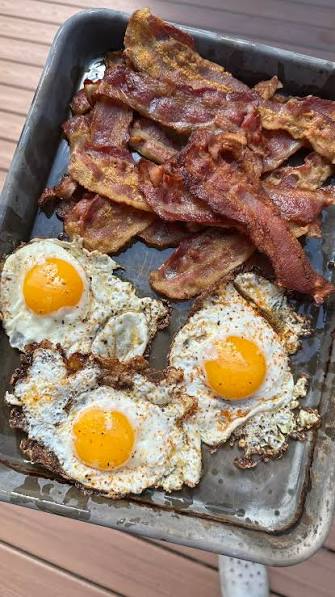
When I first started Keto, I changed to having bacon and eggs for breakfast. Very quickly, once I became more sensitive to ghrelin, the hunger hormone, I found I didn’t need breakfast, as I genuinely wasn’t hungry. My body can then carry on fasting a little longer, and can utilise the benefits of autophagy.
A hundred years ago, our great grandparents ate foods that were farmed, or grown in the fields. Now, sadly, the majority of the foods available in the supermarket, are produced in factories, highly processed and made using ingredients that would have been unheard of a few generations ago. I would argue that our relatives were far healthier too.
The trend for the last 40 years plus has been for low fat foods. When the fat is removed, so much of the flavour disappears too, so sugar or sweeteners are added to help with the flavour; but this still can be classified as low fat. Which of course is good for us, isn’t it?
The general consensus would say that there is nothing wrong with sweeteners, that they are zero calories, so what is the issue?
Think about what happens to your body when you eat something sweet, this includes sweeteners. Your tongue registers that sweet taste, and then your pancreas is signalled to produce insulin to process that sugar, to try to keep our blood glucose level stable.
But sweeteners aren’t sugar, so they do not put up our blood glucose, this insulin spike is not needed by the body, but it still occurs. This is just one of the ways our body becomes insulin resistant. Insulin insensitivity is one of the many markers of metabolic syndrome. Below is a list of ingredients copied from a supermarket own brand sweetener. Apart from the issues relating to metabolic dysfunction, I now believe that eating anything that was created in a laboratory, and the requirement for a chemistry degree to understand what it is, is not good for my body.
Yes, there are no calories, but how are these ingredients impacting on our bodies? How are they affecting our hormones such as insulin, cortisol, leptin and ghrelin. (Leptin and ghrelin are the satiety and hunger hormones in our body) So many of us now are desensitised to our own hormone signalling. We struggle to understand when we are truly hungry, and to be able to stop eating when we are full. Between this and what I now understand to be my sugar and processed food addiction, it’s not surprising that I have struggled to be a healthy weight for so many years.
I know now that zero calorie doesn’t mean something is good for me, and high fat doesn’t mean it is bad for me. It is the ingredients, and how they will impact on my hormones that is important. As ever, this is not medical advice in any way, just me sharing what has helped me, as it might help you too.