
Tag Archives: Fasting

What does breakfast mean to you?

Breakfast very simply means the first meal after you have fasted, when we break our fast. You might be thinking, “I don’t fast”, but we all do, to a greater or lesser degree. We all fast when we sleep, which hopefully for most of us will be 6/8 hours, depending on what our individual bodies need. If you eat your last meal at 6pm, and do not consume any food or drink that contains calories until 8am next morning, you will have fasted for 14 hours. Which is classed as IF, an intermittent fast.

Our bodies understand that we will naturally fast overnight, the dawn phenomenon is activated each morning to help us prepare for the day.

Our blood pressure rises a little, to help us to not feel dizzy when we stand up, after lying down for hours overnight. Our blood glucose levels increase marginally, to give us energy; this is why it is inadvisable for diabetics to use the pinprick test to check their glucose levels in the morning, as it will give a false high. For those of us who don’t eat carbs, the liver will not have stored sugar to release. So it will activate gluconeogenesis (production of new sugar made from naturally occurring amino acids) to give our bodies the energy boost.

I used to eat cereals or toast for breakfast, maybe even crumpets if I felt like a real treat. Which I now understand is high in carbs, and therefore sugar. When our body consumes over a teaspoon of sugar, just 4 grams, our pancreas needs to send insulin to stop the blood having too much sugar circulating. Eating carbs too early in the day, when we already have a naturally occurring rise in blood glucose, puts extra strain on the pancreas.

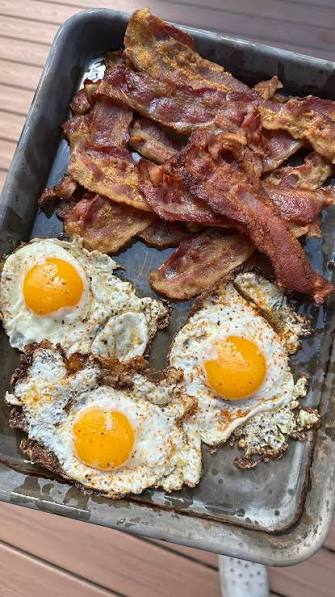
When I first started Keto, I changed to having bacon and eggs for breakfast. Very quickly, once I became more sensitive to ghrelin, the hunger hormone, I found I didn’t need breakfast, as I genuinely wasn’t hungry. My body can then carry on fasting a little longer, and can utilise the benefits of autophagy.

Click here to read about autophagy.

As ever, the above is not medical advice, just what I have researched and learned from my own experiences over the last six years.
Autophagy

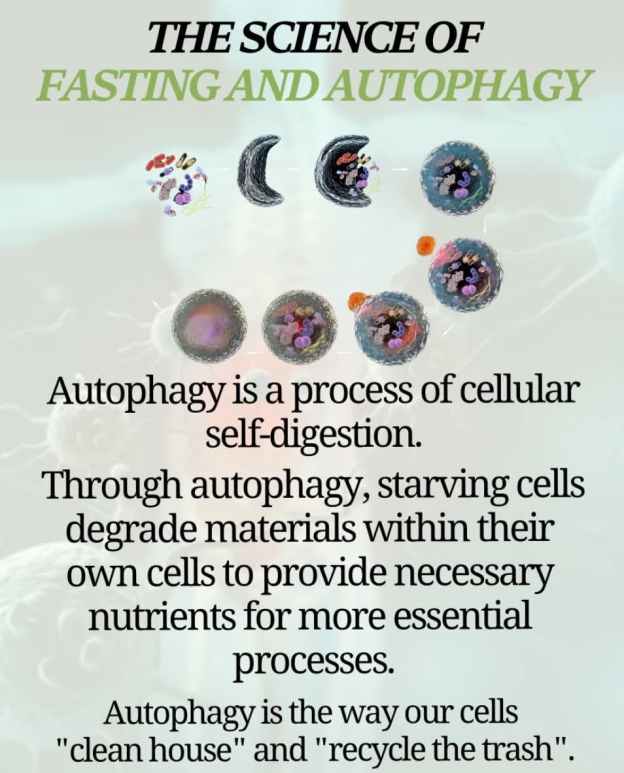
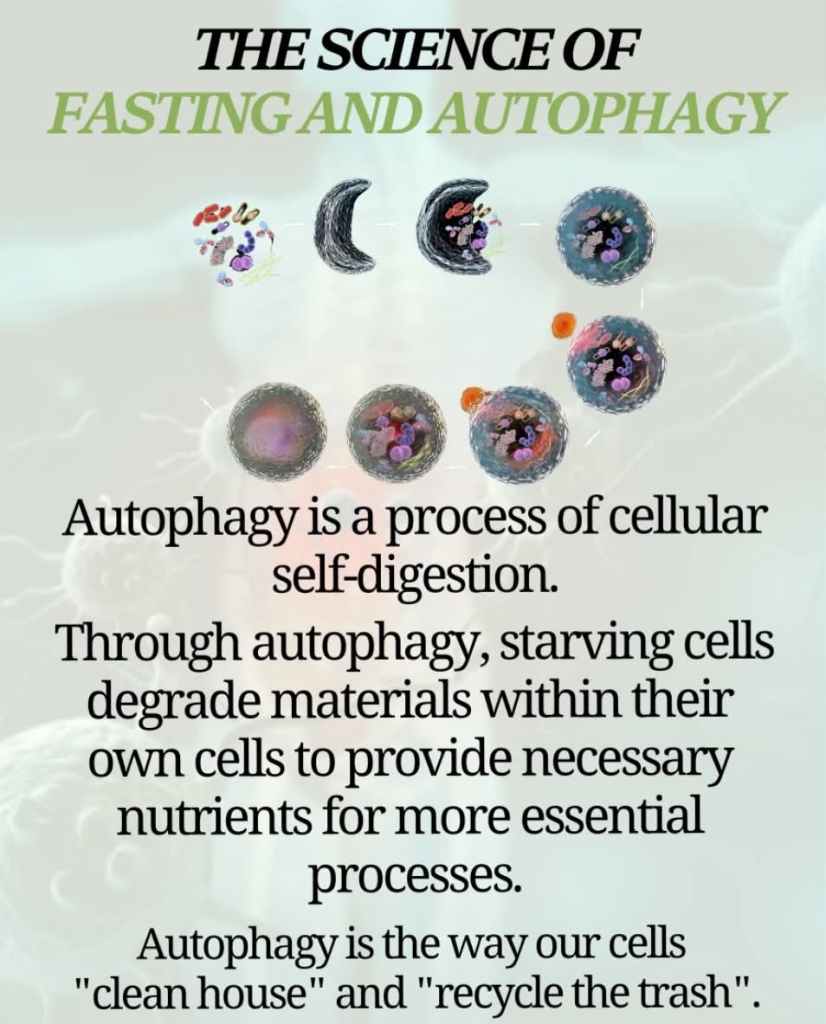
If I was ever tempted to try for Mastermind, my specialist subject would not be The Nobel Prize for Physiology. Having said that, because of my Carnivore lifestyle and fasting, I know a little of the 2016 winner, Yoshinori Ohsumi. He discovered the powerful healing of autophagy, and the wide positive impact it has on the human body.

Autophagy occurs when you have fasted for around 16-24 hours, but when you enter into a prolonged fast, eg over 24 hours, its power increases. Fasting is when we rest our digestive system by not asking it to continuously process food. (The average person now eats 5/6 times a day, snacking between meals counts as eating) It is worth saying that fasting is very different to starvation. When we fast for either religious or health benefits, we are safe, nourished and hydrated.

In basic terms, I think of autophagy like giving your house a good deep clean. You don’t just dust off the surfaces, you get down into all the nooks and crannies, and sort out all the junk hiding at the back of the cupboards. That junk either gets taken out as waste, or gets recycled. This is exactly what autophagy does.

Modern life, aging and ill health causes damage to the cells inside our bodies, these damaged cells can cause us major health issues. It is these cells, along with damaged proteins and mitochondria that are broken down during autophagy. It is this issue that some people become quite alarmed by, thinking our body will start breaking down its own muscle and healthy tissue, but it’s not the case. The body breaks down the damaged cells, which it recycles into healthy new cells and proteins. This is hugely protective from long term chronic and progressive health conditions. Fasting has been used safely for thousands of years, both therapeutically and religiously, but modern day consensus tells us that it is bad for us to not eat. Thankfully, Yoshinori Ohsumi has helped to show the world how incorrect that assumption is.

If you want to look deeper into mitochondria, have a look for Dr Isabella Cooper; and for further information on fasting, Dr Jason Fung knows all there is to know. Or if you are feeling particularly ready for a challenge, look for the 2016 Nobel Prize winning study.