Cholesterol is essential, not a toxin.
Cholesterol is necessary for cell membranes, steroid hormones and bile acids. Carnivore advocates argue that a high cholesterol reading should not automatically be treated as a disease. The important fact is that the body needs cholesterol
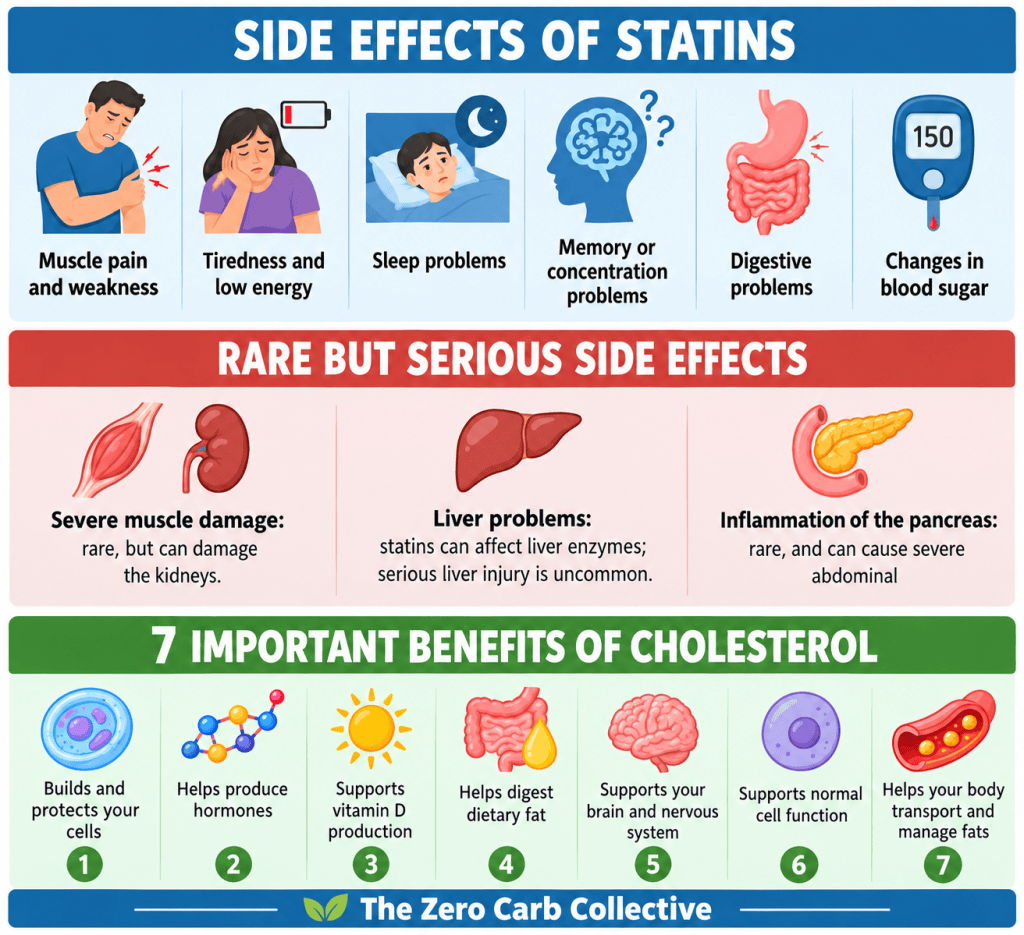
SIDE EFFECTS OF STATINS
Muscle pain and weakness: Aches, cramps, tenderness or unusual muscle weakness. Most muscle symptoms are not serious, but unexplained symptoms should be checked.
Tiredness and low energy: Some people report feeling unusually tired or physically weaker than normal.
Sleep problems: Difficulty sleeping or changes in sleep may occur with some statins.
Memory or concentration problems: Some people report forgetfulness or confusion. However, research has not established that statins cause most of these reported symptoms.
Digestive problems: Nausea, constipation, diarrhoea, indigestion, wind or stomach discomfort.
Changes in blood sugar: Statins can cause a small increase in blood sugar and slightly increase the risk of developing type 2 diabetes in some people.
RARE BUT SERIOUS SIDE EFFECTS
Severe muscle damage: rare, but can damage the kidneys.
Liver problems: statins can affect liver enzymes; serious liver injury is uncommon.
Inflammation of the pancreas: rare, and can cause severe abdominal
Cholesterol is essential for human life.
Cholesterol is essential for human life. Your body needs it to build cells, produce important hormones, make vitamin D and help digest fats. It isn’t simply a harmful substance that we should try to eliminate.
7 important benefits of cholesterol
Builds and protects your cells: Cholesterol is a key component of your cell membranes. It helps maintain their structure, stability and flexibility so cells can function properly.
Helps produce hormones: Your body uses cholesterol to make steroid hormones, including testosterone, oestrogen, progesterone and cortisol.
Supports vitamin D production: Your skin uses a cholesterol-related substance to produce vitamin D when exposed to suitable ultraviolet B (UVB) sunlight.
Helps digest dietary fat: Your liver uses cholesterol to make bile acids, which help break down and absorb fats and fat-soluble vitamins A, D, E and K.
Supports your brain and nervous system: Cholesterol is important for nerve-cell membranes, synapses and the myelin sheaths that insulate nerve fibres. Most cholesterol in the brain is made locally because blood cholesterol does not readily cross the blood–brain barrier.
Supports normal cell function: Cholesterol helps cells maintain their membranes and organise the proteins involved in cell signalling and other essential processes.
Helps your body transport and manage fats: Cholesterol travels around your bloodstream in lipoproteins, which also carry triglycerides and other fats to and from tissues.
My Final Thoughts: There is no need to take statins but if you personally need one depends on your cardiovascular risk, medical history and the likely absolute benefit—not simply on having a high cholesterol result.
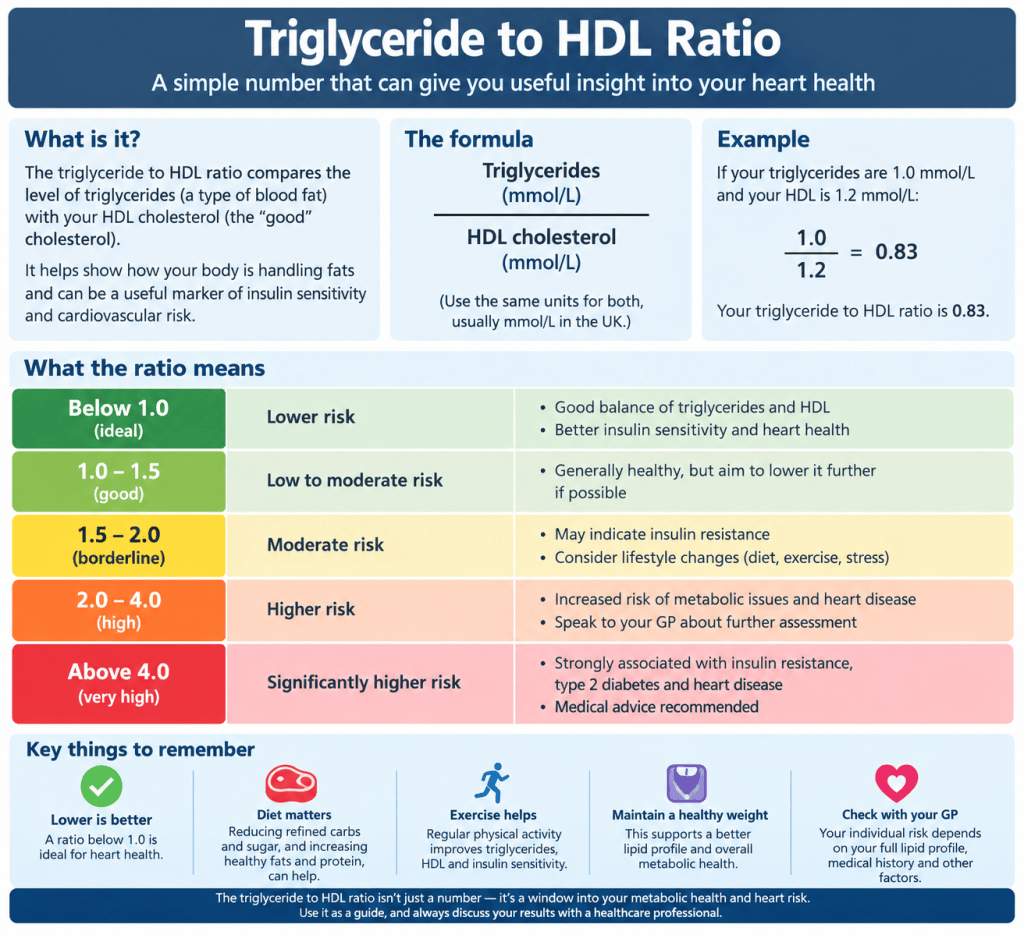
LDL is not bad, your HDL and Triglycerides ratio is more telling. Also your CRP (inflammatory marker) and HBA1C are really important to look at, as they, and your waist to height ratio, are really important measures of good metabolic health.

