
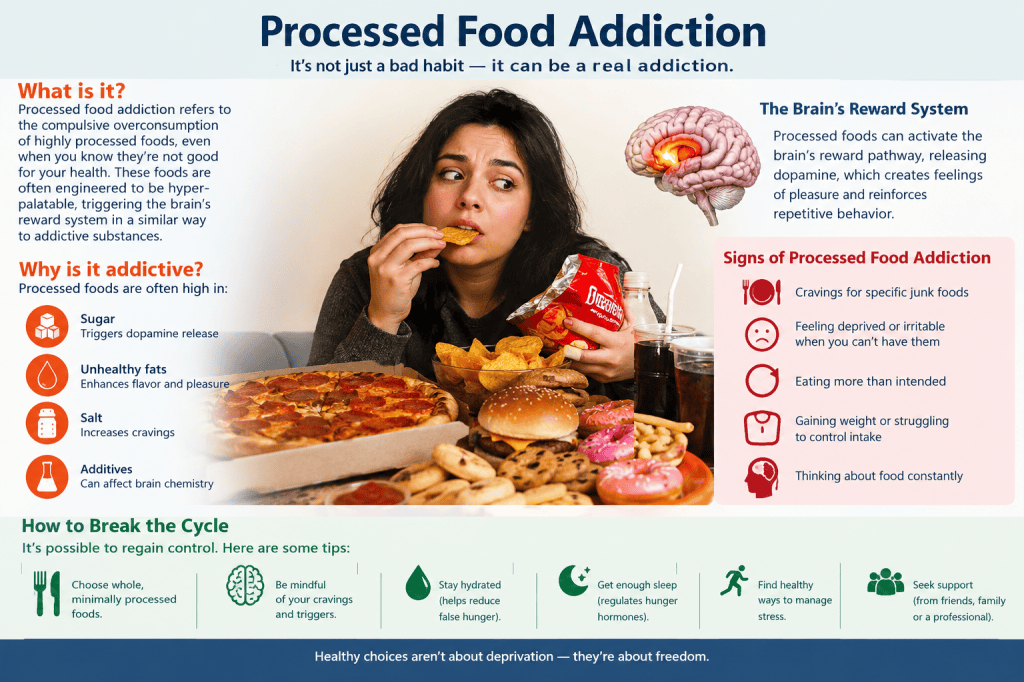
Signs you might be struggling with it:
- Strong cravings, even when you’re not physically hungry.
- Feeling unable to stop once you’ve started eating.
- Eating more than you intended, sometimes in secret.
- Repeatedly promising yourself you’ll stop, then returning to the same foods.
- Using food to cope with stress, boredom, loneliness or difficult emotions.
- Feeling guilty or ashamed after eating.
- Thinking about food frequently or feeling preoccupied with your next snack.
- Alternating between restricting foods and then overeating them.
How to crowd out processed-food cravings on a carnivore diet

The most useful approach is to build satisfying eating habits that make processed foods less appealing, rather than relying on willpower or trying to fight every craving.
Eat enough at mealtimes
Have satisfying portions of meat, fish and eggs. Consistently under-eating can leave you hungry and intensify cravings later in the day.
Prioritise variety within your low carbohydrate lifestyle.
Rotate beef, lamb, poultry, fish and eggs. Include oily fish for omega-3 fats. You don’t need to force yourself to eat excessive amounts of fat or butter to suppress cravings.
Keep cooked meat and boiled eggs ready to eat. This helps when you’re hungry and tempted by takeaway food or packaged snacks.

What to do when a powerful craving hits
Try this five-step process:
- Pause for a moment. Notice the craving without judging yourself.
- Check for hunger. Ask when you last ate and whether your meals have been sufficient. Are you just bored?
- Eat if you’re hungry. Don’t use strict rules to override genuine hunger.
- Change your surroundings. Distraction can help, take a short walk or move to another room.
- Observe the trigger. Note whether the craving was linked to stress, fatigue, a particular time or seeing food.
The goal is to weaken the automatic link between a trigger and eating. If you eat carbohydrates, you haven’t failed; return to your usual routine at the next meal.

